
ADVANCED BILIARY ENDOSCOPY & SURGICAL CARE · EDINBURGH
ERCP & Bile Duct Treatment in
Edinburgh
Bile duct stones, blockages and jaundice — investigated and treated by one consultant who performs both the endoscopy and the surgery.
AUDITED CLINICAL PRECISION
>94%
Consistently above 94% independently-audited success rates across complex therapeutic interventions.
4.98/5 FROM 149+ VERIFIED PATIENT REVIEWS · DOCTIFY OUTSTANDING PATIENT EXPERIENCE
DAY-CASE PROCEDURE
~30 Mins
Under conscious sedation — home the same
day or following morning with minimal post-
operative downtime.
Consultant Endoscopist & Hepatobiliary Surgeon
INSURER ACCREDITED
Fee-assured
Recognized and fee-assured with all major
UK private health insurers (Bupa, AXA Health,
Aviva, Vitality, WPA).
Spire Murrayfield Hospital & Shawfair Park
CLINICAL INDICATION
When ERCP is needed
INDICATION 01
Choledocholithiasis
Gallstones that have escaped
into the bile duct — diagnosed
before, during, or remaining
after gallbladder surgery.
Duct stone clearance
ERCP (endoscopic retrograde cholangiopancreatography) is an advanced endoscopic technique
for reaching the bile duct — the tube that carries bile from the liver to the intestine — without
an open operation. It is most often recommended when an imaging scan (ultrasound, CT, or
MRCP) demonstrates calculi within the biliary tree, or a stricture causing biliary obstruction.
INDICATION 02
Obstructive Jaundice
Yellowing of the skin or sclera,
dark urine, and pale stools
caused by mechanical
blockage of the common bile duct.
Urgent decompression
THE BALANCED CLINICAL PERSPECTIVE
INDICATION 03
Biliary Stricture
Bile duct narrowing requiring
balloon dilatation or precision
endoprosthesis (stent)
placement to restore
unobstructed drainage.
Stent restoration
"In gallstone disease there are genuine pros and cons between ERCP and surgery, and the right answer is patient-specific. That judgement is easiest to make well when the person advising you performs both."
— MR CHRIS JOHNSTON, CONSULTANT TRANSPLANT & GENERAL SURGEON, ADVANCED ENDOSCOPIST
INDICATION 04
Gallstone Pancreatitis
Acute inflammation of the
pancreas triggered by an
impacted stone at the ampulla,
requiring prompt therapeutic
extraction.
Ampullary relief
CONTINUITY OF CARE
Why one consultant for scan, endoscopy and
surgery
Eliminating fragmented clinical pathways, dual waiting lists, and conflicting medical opinions.
THE CONVENTIONAL HOSPITAL MODEL
"In many hospitals, a patient is passed
between a gastroenterologist for ERCP and
a surgeon for the gallbladder — two
clinicians, two waiting lists, two
conversations."
This traditional bifurcation often results in delayed
inter-specialty referrals, duplicated radiological
evaluations, and prolonged discomfort for patients
caught between competing departmental priorities.
THE EDINBURGH COMBINED PRACTICE MODEL
As a dual-trained consultant who performs both complex
endoscopic retrograde cholangiopancreatography and laparoscopic
hepatobiliary surgery, your diagnostic review, endoscopic duct
clearance, and surgical management are unified into a singular
clinical pathway.
One Coordinated Plan
One continuous assessment, one point of
contact, and zero administrative handoffs.
Zero Inter-Referral Delays
Where both ERCP and cholecystectomy are
needed, scheduling is seamlessly aligned.
Unbiased Clinical Choice
The ERCP-versus-surgery decision is made with zero procedural bias or professional stake.
Integrated Alternative Safety
Immediate transition to surgical bile duct exploration if anatomical variations preclude ERCP.
SURGICAL PRECISION & TECHNIQUE
What the procedure involves
PHASE 01
• 6H FASTING
PHASE 02
Beforehand
Nothing to eat for six hours before your admission; small sips of water are
permitted until two hours before. If you take anticoagulant or antiplatelet
medication (such as warfarin, clopidogrel, rivaroxaban or similar), please inform
the team in advance — pausing is required under managed haematological
protocol. Routine pre-procedure blood panels (FBC, clotting, LFTs) are checked in
advance.
• WATER UP TO 2H
Sedation, not general anaesthetic
You receive a local anaesthetic throat spray and target-controlled intravenous
sedation — administered deeper than routine gastroscopy so that patients remain
deeply comfortable and remember very little afterwards. There is ample room to
breathe naturally around the scope, and blood oxygenation and cardiac rhythm are
continuously monitored. Most patients drift off within a minute of scope
positioning.
• CONSCIOUS IV SEDATION
PHASE 03
• ANTICOAGULANT REVIEW
• CONTINUOUS SPO2 MONITORING
• NATURAL AIRWAY
The procedure itself
The side-viewing duodenoscope is guided smoothly through the stomach into the
duodenum. A fine cannula is introduced into the ampulla of Vater where the
common bile duct enters the bowel. Radiopaque contrast is gently instilled under
live fluoroscopic X-ray imaging (cholangiogram) to delineate duct anatomy and
calculus location. A precise, painless microscopic division of the muscular
sphincter (sphincterotomy) facilitates basket or balloon clearance of stones, or
insertion of a drainage stent.
Protective Protocol: A preventative anti-inflammatory dose (diclofenac) is administered during ERCP, clinical practice rigorously proven in trials to dramatically suppress post-procedure pancreatitis risk.
ERCP typically takes around 30 minutes and is performed as a day
case: home the same day, or occasionally the following morning.
ANATOMICAL ARCHITECTURE
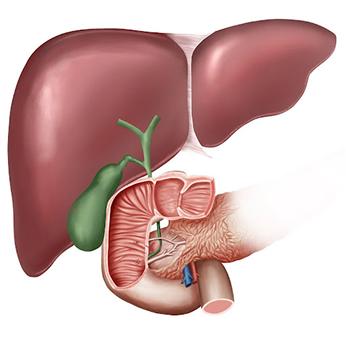
Duodenal
Ampulla:
Common Bile Duct:
Biliary & Pancreatic Ducts
Point of endoscopic cannulation and therapeutic sphincterotomy.
Direct extraction of stones or placement of self-expanding stent.
 Research publications: ORCID 0000-0001-9935-7365